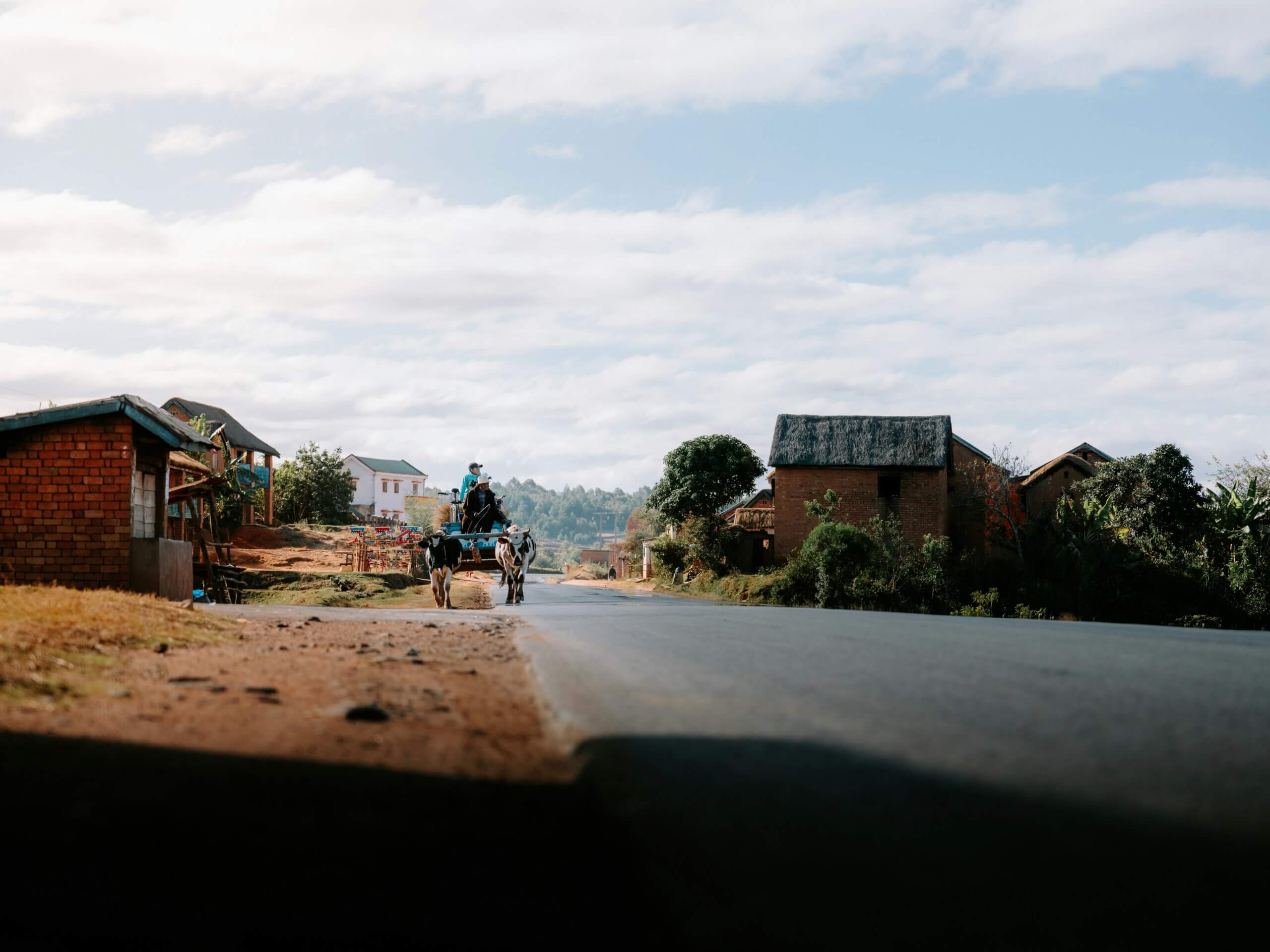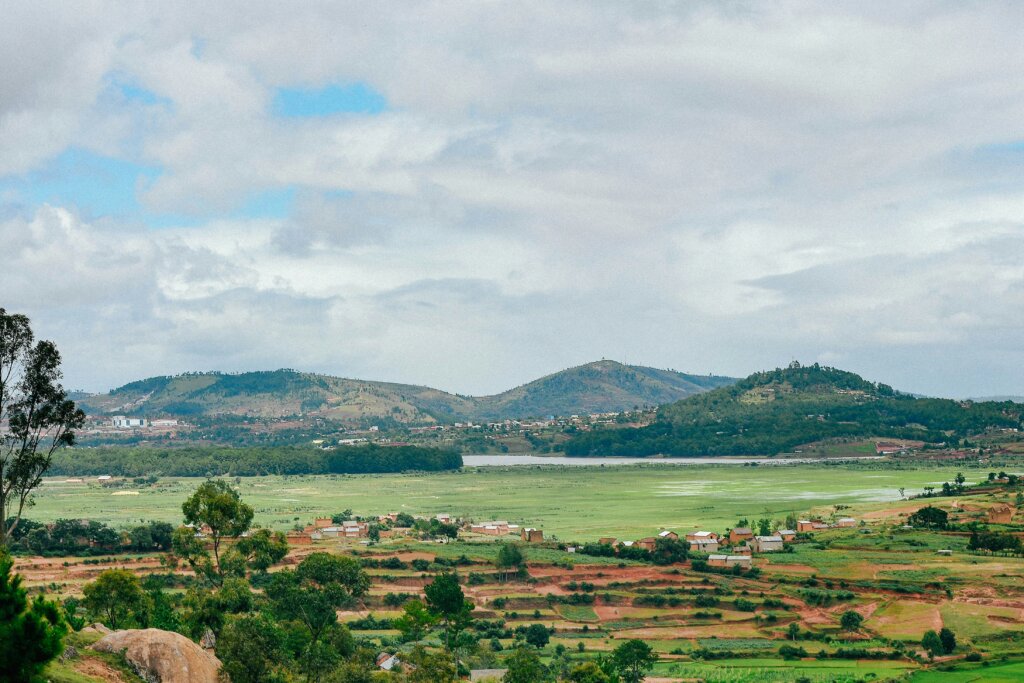
1- The exceptional diversity of the landscapes
2- Camping under the stars
3- The Spectacular Tsingy of Bemaraha
4- The Famous Avenue of the Baobabs
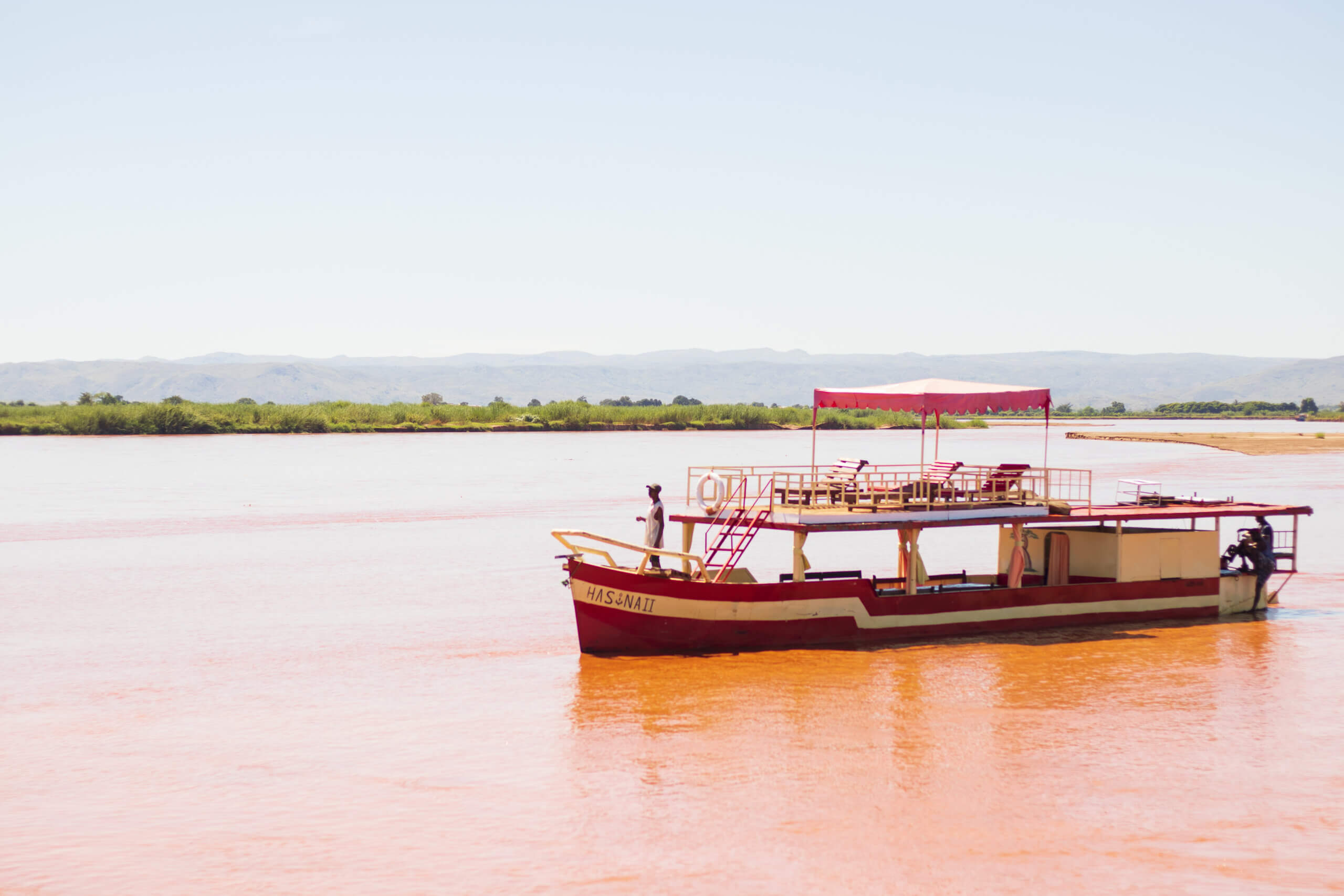
When you get to Miandrivazo, driving on a nice paved road crossing the western Highlands, you take the inland trails as far as the shores of the Mahajilo (a tributary of the Tsiribihina). This is where the river navigation starts.
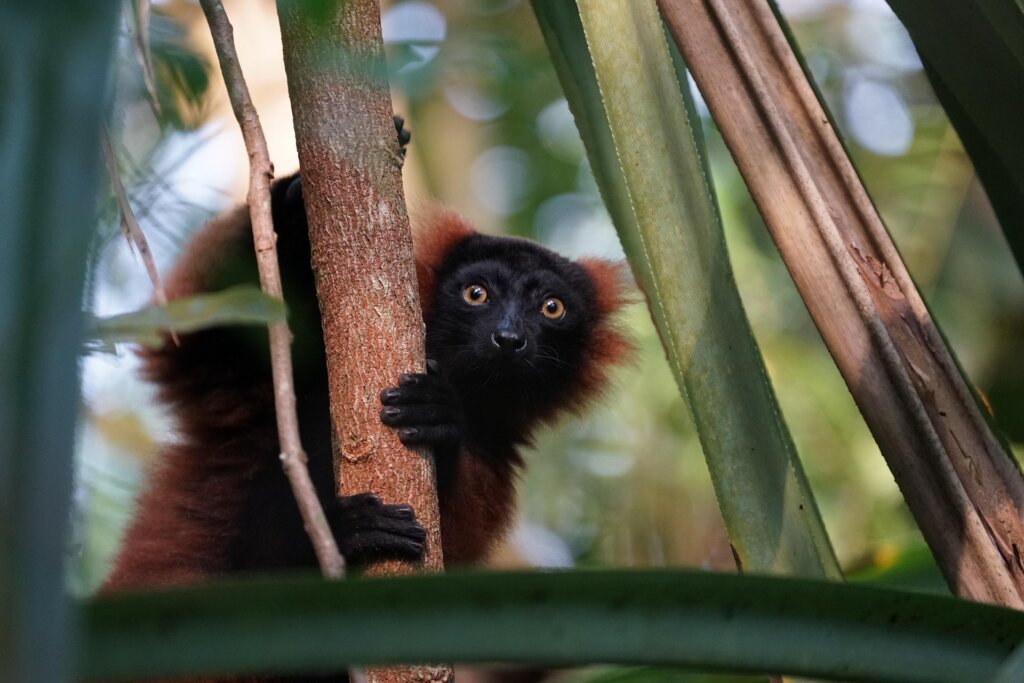
A trip down the Tsiribihina River offers a total immersion in nature, combining untamed wilderness with authentic encounters. Its main attraction lies in the exceptional diversity of the landscapes you’ll pass through, ranging from the cliffs of wild gorges teeming with lemurs to vast plains, and including natural pools fed by waterfalls.
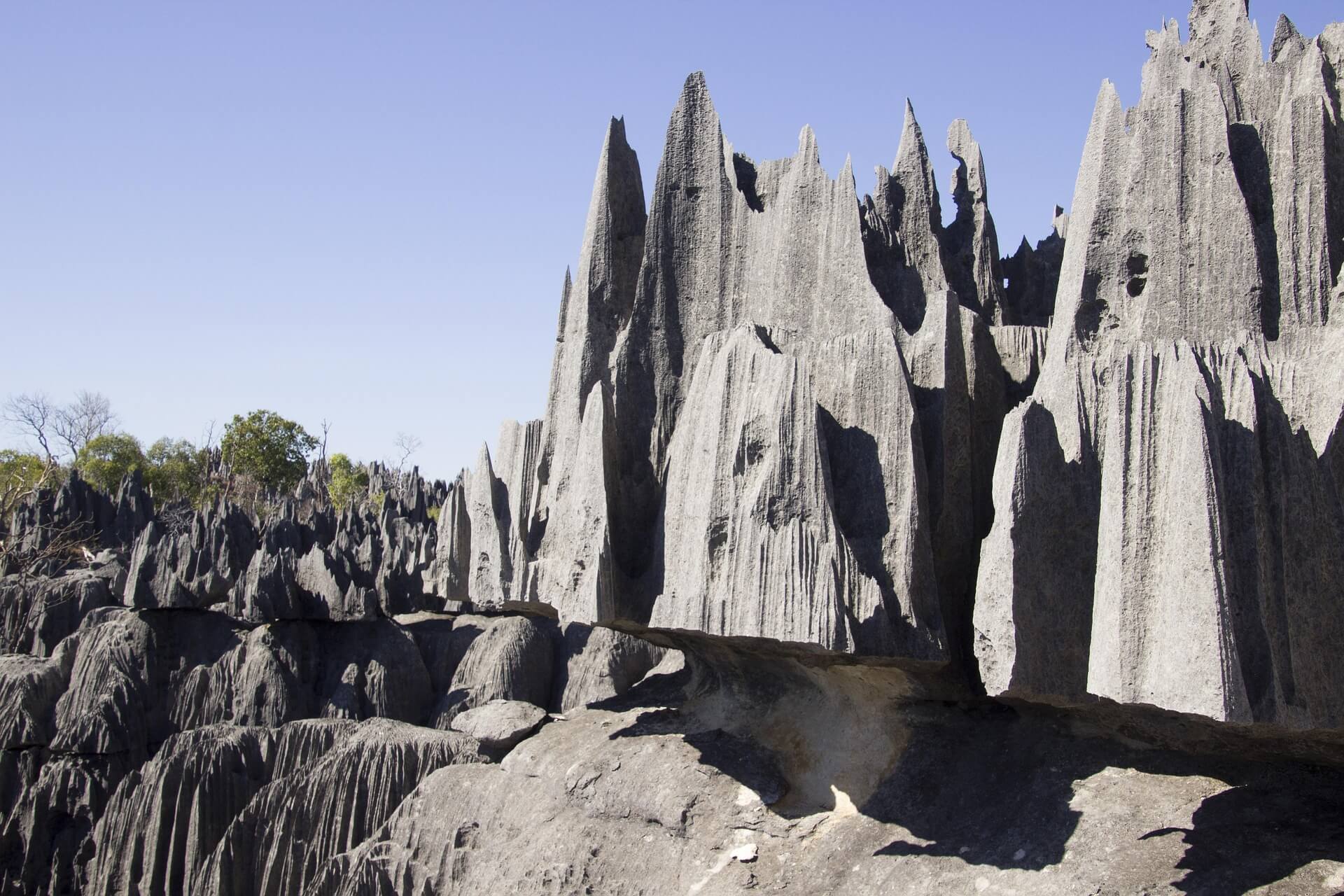
Besides, the Tsingy de Bemaraha National Park, designated a UNESCO World Natural Heritage Site, reveals landscapes of unparalleled beauty! Imagine a multitude of jagged rock “skyscrapers” piled high, leaving only narrow passages leading to crevices and caves !
Generally most visitors coming to the park usually stay over three nights to explore this unique and amazing place. A recommended plan would be:
Day 1: Petit tsingy: this circuit of 4-5 hours of duration passes through a labyrinth of limestones and two view points over the impressive pinnacles. There are some good chances to spot the Decken’s sifaka and red-fronted brown lemurs. Manambolo gorge: It is a canoe trip
along the gorge combined with an easier path through caves, stalactites, stalagmites and the famous family tomb of the Vazimba tribe.
Day 2: The big Tsingy: This is probably the most rewarding whole-day trip within the park as it goes deep into the limestone forest passing through several hanging bridges with the impressive karstic formations below your feet. The trail is not technically difficult and even children can cope with it, but you certainly should not suffer from vertigo! The look down from the hanging bridge is something to
avoid for the easily fainted.
At the end of the tour, we’ll visit the Avenue of the Baobabs to witness an unforgettable sunset.
| Breakfast at hotel. Departure by car to Antananarivo then Antsirabe, the second-largest city in the central highlands, located 170 km away, south of Antananarivo, reachable along a road that winds through the countryside, where you can admire extensive rice fields and the work of the fields that varies according to the seasons; also the typical villages of the crossed regions, the Imerina and the Vakinankaratra; along the way, stop in the large village of Ambatolampy to visit the artisans who manufacture valuable aluminum objects, both decorative and for daily use. Arrival in Antsirabe in the evening. Installation at your hotel for a dinner and an overnight at hotel. |
|
Breakfast at hotel; morning visit of the countryside of Antsirabe where you will discover the daily life of the locals in an exotic landscape; then continuation of the road towards the West; the landscapes gradually change through a mountainous region, sparsely inhabited up to Miandrivazo, a large village on the banks of the Mahajilo River, a tributary of the Tsiribihina; accommodation at hotel; dinner and overnight.
| Breakfast at hotel; morning departure on dirt road that leads to the riverbank in about 1h near the village of Masiakampy; upon arrival, board the boat and begin the cruise; these boats are motorized barges, formerly used to transport tobacco and later adapted for river tourism; At the rear are the cockpit (pilot’s station) and the galley; on the lower deck, the lounge and dining room, with a table, chairs, and benches; the cruise begins mid-morning, passing through vast cultivated plains; as we navigate near the banks and gorges of the Tsiribihina River, you can see villagers from the Sakalava ethnic group, whose huts are mainly made of reeds and whose roofs are thatched with rice straw or palm leaves. In the afternoon, stop at the Nosy Ampela waterfall (Women’s Island), where you can take a refreshing swim in unspoiled nature, occasionally watched by shy lemurs. The camp will be set up on a large sandbar nearby; meal on board and overnight in tents. |
|
Breakfast on board, then we continue into the meandering reaches of the Tsiribihina River, where we can spot various bird species along the riverbanks, such as herons of various colors, flamboyant kingfishers, the beautiful drongo with its distinctive crest, and various species of raptors, including, on occasion, the fish eagle; you may also
encounter barges used to transport local produce, serving as a means of trade and transportation for villagers, as well as canoes; stop at the village of Begidro, famous for its former tobacco plantations, now cultivated using traditional methods; Continuing the cruise, the landscapes unfold before us; we admire, in particular, the high cliffs where Kina Kina bats nest, which help pollinate the majestic Kapoaka tree, prized because its fruits contain a very light, woolly fiber used to stuff cushions and mattresses as well as in ecosustainable clothing; Toward the end of the day, another stop at the village of Ambatomisay to admire the first “Andasonia Za” baobabs;
the barge crew will set up camp on a beach; after dinner, there will be a small performance of traditional dances around a bonfire; meal on board and overnight in tents.
| Breakfast at the camp, continuation of the navigation. until we meet the Tsiribihina river; lunch on board. Afterwards, meet your driver and continuation along the track through the bush, where we can see wild landscape and villages. Arrival at the Manambolo river and a crossing on raft; then we reach the village of Bekopaka. Accommodation at hotel. In the evening, dinner and overnight at hotel. |
|
Breakfast at the hotel; whole day dedicated to visiting the fantastic Great Tsingy, an impressive stone wall about 100 km long, almost impenetrable, which has preserved this primitive environment intact; approach to the park entrance by car through the savannah, at the base of the cliffs, an ancient coral reef sculpted into spiers by
weathering over geological eras, which can reach a height of up to 60 meters above the ground; exploration of the park, a UNESCO World Heritage site; this is probably the most rewarding hike; the trails leads inside the park, into the depths of the forest and between limestone pinnacles, passing through a series of suspension bridges with the impressive karst formations underfoot; the trail is not technically difficult and even older children can do it, but we certainly should not suffer from vertigo! picnic lunch during the excursion; return to the hotel at the end of the day; half board and overnight at the hotel.
| Breakfast at the hotel. Return to Morondava, always fascinated by the natural wonders along the way, stopping in the most interesting places. Lunch in a restaurant along the way. Continuation of the road in the afternoon. At sunset, along the track that leads to Morondava, the famous Baobab Avenue, where these gigantic and wonderful trees take on surprising colors when the sun sets, stop in the savannah to watch the impressive spectacle. After the show, continuation and arrival in Morondava at the end of the day. Accommodation at hotel; dinner and overnight. |
|
Breakfast at the hotel; according to your flight schedule, transfer to airport for the flight back to the capital.
End of services.